

December 22, 2025
That pool looked perfect when it was finished. Sparkling tiles, smooth surfaces, crystal clear water. Fast forward two summers, and the water level drops mysteriously overnight. Tiles crack and pop off around the waterline. Damp patches appear on the surrounding paving, growing larger each week.
Pool owners and resort managers in Perth face this nightmare constantly. A small leak noticed too late becomes structural damage, costing tens of thousands to repair. What started as a minor failure in swimming pool water proofing quickly escalates into gutting and rebuilding entire pool sections.
Perth’s climate makes concrete pool waterproofing particularly challenging. Scorching summers cause materials to expand, while cooler winters force them to contract. This constant movement cracks inferior waterproofing systems within just a few years. Add aggressive, chlorinated water into the mix and it penetrates every weak point, accelerating deterioration. Without proper swimming pool water proofing from the start, a pool becomes an ongoing financial burden rather than a long-term asset.
Understanding why some pools last for decades while others turn into expensive headaches often comes down to the quality of the concrete pool waterproofing system used. Getting it right early helps prevent leaks, protects the structure, and avoids costly repairs before serious damage sets in.
What Pool Leaks Actually Cost
Most pool owners have no idea how bad leaks are until they get the repair quote and want to cry.
- Water loss seems like the problem, but that’s actually the cheap bit. Refilling costs you in water bills, sure, but the chemicals are what really hurt. Every time you top it up with fresh water, everything gets thrown off. Your automatic system can’t do its job when the water’s different every single day.
- Structural damage happens when leaked water saturates soil around pool foundations. Ground becomes unstable, causing settlement and cracking. This creates bigger leaks, more settlement, accelerated failure. Once structural movement starts, repairs require excavation, foundation work, and complete pool rebuilding in severe cases.
- Surrounding damage extends beyond the pool itself. Leaked water undermines paving, damages garden areas, and can even affect building foundations nearby. That mysterious damp patch in the garage? It could be pool water travelling underground from a leak on the opposite side.
- Chemical damage occurs when chlorinated water escapes through cracks and attacks reinforcing steel in concrete. Rust expands, cracking the concrete further. This cycle accelerates exponentially once started, turning minor leaks into catastrophic failures requiring complete replacement.
Where Pool Waterproofing Fails Most Often
Pool leaks aren’t random bad luck. They happen in predictable locations where waterproofing gets stressed most or is applied incorrectly.
- Tile line area takes the worst punishment from water level fluctuations, chemical concentration, and temperature cycling. This zone is constantly wet and dry, expanding and contracting. Inferior waterproofing here fails first, causing tile delamination and cracks spreading into the structure.
- Steps and benches create complex angles and joints where the waterproofing application gets tricky. Corners accumulate stress, and any application errors show up as leaks within months. These features also get bumped by users constantly, creating impact damage that inferior systems can’t handle.
- Return lines and fittings penetrate the waterproof membrane, creating potential leak points. Improper sealing around these penetrations guarantees eventual failure. Even properly sealed fittings can fail if the surrounding waterproofing degrades and allows water behind the membrane.
- Structural cracks from ground movement stress waterproofing beyond its flexibility limits. Rigid waterproofing systems crack along with the concrete. Only properly flexible swimming pool water proofing systems accommodate structural movement without failing.
Signs Your Pool Needs Waterproofing Attention Now
Catching problems early prevents expensive disasters later. These warning signs mean waterproofing is already failing and getting worse daily.
- Dropping water level beyond normal evaporation rates indicates leaks somewhere. Perth’s summers cause significant evaporation, but losing more than 5mm daily suggests problems. Track levels consistently to establish baseline versus actual loss.
- Soggy ground around the pool that stays wet even during dry periods shows water escaping underground. This becomes obvious in garden beds but can happen under paving invisibly until damage becomes severe.
- Loose or cracked tiles signal waterproofing failure underneath. Tiles don’t randomly fail on properly waterproofed surfaces. Once tiles start popping, the waterproofing membrane has already failed in those areas.
- Unexplained algae growth in specific areas despite proper chemical balance suggests water composition differs there. Leaks allow untreated groundwater to seep in, creating localised chemistry problems and algae blooms.
- Visible cracks in pool surfaces need immediate attention, regardless of whether water loss is yet obvious. Cracks will leak eventually if not already, and delaying repairs allows much worse damage to develop.
What Proper Pool Waterproofing Actually Involves
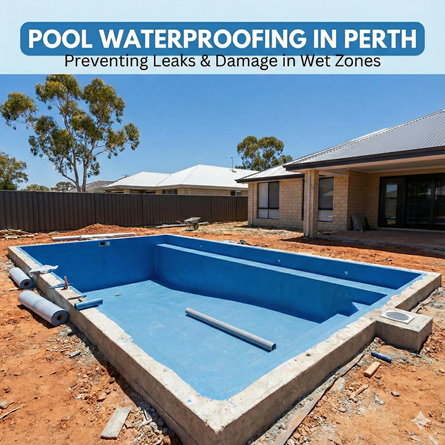
Real concrete pool waterproofing isn’t slapping some sealant on concrete and hoping for the best. It’s engineered systems designed specifically for pool conditions.
- Surface preparation determines everything. Concrete must be properly cured, clean, and profiled correctly. Contamination, laitance, or inadequate surface texture prevents proper bonding. Skipping prep guarantees premature failure regardless of product quality.
- Membrane selection matters enormously. Different products suit different applications. Liquid-applied membranes work well for complex shapes but require skilled application. Sheet membranes provide consistent thickness but need perfect installation at overlaps and penetrations. Cementitious systems offer different benefits for specific situations.
- Multiple layers create redundancy. Quality installations use primer, membrane, and protective layers as complete systems. Single coat applications might look adequate initially, but lack durability for long term pool exposure.
- Proper curing and testing verify the system works before tiling or finishing. Flood testing catches installation errors while corrections remain simple and cheap. Skipping this step means discovering problems only after expensive finishes are installed.
Seasonal Considerations for Perth Pools
Perth’s distinct seasons affect pool waterproofing differently throughout the year, creating optimal timing for repairs and maintenance.
- Summer stress comes from maximum temperature cycling, the highest chemical concentrations, and peak usage. Existing waterproofing weaknesses worsen rapidly during hot months. This isn’t ideal repair timing because heat affects application, but it’s when problems become most obvious.
- Autumn opportunity provides excellent conditions for waterproofing work. Moderate temperatures, lower humidity, and reduced pool usage make this the smart time for major waterproofing projects. Materials cure properly without temperature extremes affecting performance.
- Winter challenges bring cooler temperatures and rain that complicate waterproofing applications. Some products won’t cure properly in cold or wet conditions. However, winter reveals waterproofing problems clearly through reduced evaporation, making leaks more obvious.
- Spring preparation before summer hits makes sense for addressing problems discovered during winter. Conditions are improving, and repairs completed before peak season prevent summer failures.
Stop Leaks Before They Start Costing Serious Money
Pool waterproofing isn’t optional maintenance to address eventually when convenient. It’s critical infrastructure preventing catastrophic damage that turns backyard pools into money pits.
Small leaks ignored become structural failures requiring complete rebuilds. Cracked tiles left unaddressed allow water to build up behind surfaces, destroying entire sections. Minor damp patches grow into foundation-threatening water infiltration.
The difference between maintaining a functional pool for decades versus replacing it completely? Proper swimming pool water proofing from the beginning and addressing problems immediately when they appear. Waiting never improves the situation or reduces costs. It only guarantees worse damage and higher repair bills.
Pool owners and resort managers watching water levels drop or tiles cracking need to act now, not next season when it’s more convenient. Waterproofing failures accelerate exponentially once started.
Professional Pool Waterproofing Solutions
Waterproofing Perth handles concrete pool waterproofing and swimming pool water proofing across Perth. Small fixes or full rewaterproofing jobs, they do it all. They’ll check things over before they turn into disasters, and use proper materials with people who know what they’re doing so it actually holds up.
Don’t sit around waiting for a small leak to turn into a massive bill. Contact Waterproofing Perth today for pool waterproofing that stops problems instead of just putting them off. Your pool and your bank account will both be better off.