

May 13, 2026
Most people only think about waterproofing when something has already gone wrong. A wet patch on the ceiling. A bathroom that smells off no matter how much you clean it. Tiles that have started to lift for no obvious reason. By that point the conversation has shifted from prevention to damage control, and the options on the table look very different from what they would have been earlier.
Then there is the other group. Builders and homeowners mid-construction who are making waterproofing decisions before a single drop of water has caused any trouble. Both groups need waterproofing work done. What they need it to do, and how that work actually gets carried out, is quite different from one to the other.
Why Treating These Two Jobs the Same Way Causes Problems
Plenty of people, including some who have been in the building industry for years, treat new build waterproofing and remedial work as though they are basically the same thing done under slightly different circumstances. Find a membrane, apply it properly, move on. That way of thinking is where a lot of failed waterproofing jobs start.
The conditions going into each job are different. The preparation is different. What the work costs is different. What can go wrong is different. Any experienced waterproofing specialist Perth who has done both types of work will say the same thing: running a remedial job like a new build, or the other way around, is a reliable way to end up back at square one before too long.
What Actually Happens on a New Build Waterproofing Job
When waterproofing goes in during construction, the contractor is working in about as good a set of conditions as the job ever offers. Fresh concrete, open surfaces, no finishes in the way, and the membrane going in as part of a planned sequence before anything else gets built over the top of it.
That access matters more than most people appreciate. Getting to every corner, junction, and pipe penetration costs nothing extra at this stage because everything is right there in front of you. The work can be done properly, looked over before it gets covered, and then tiled or screeded over with reasonable confidence that the system underneath is intact.
On a new build the process tends to go like this:
- Substrate is prepared and primed on fresh concrete or masonry
- Membrane is applied across the full surface to the correct thickness
- All corners, coves, junctions, and penetrations get properly detailed
- Everything gets checked before any covering layers go on top
Predictable, planned, and relatively straightforward. That is what new build waterproofing looks like when it is being done properly.
Why Remedial Waterproofing Is a Completely Different Challenge
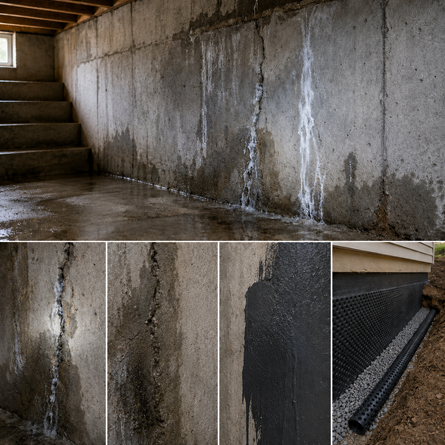
Remedial work starts from a position that is almost the opposite of everything described above. Something has already failed. Water is somewhere it should not be, and the job is not just to seal a surface but to work backwards through layers of finishes, figure out where the water is actually coming from, assess what condition the substrate is in after sitting wet for however long, and then decide what needs to happen before a new membrane can even go down.
That investigation piece is where remedial jobs either go right or fall apart. Water does not show up where it enters. It travels along substrates, follows the path of least resistance, and tends to appear on a ceiling or wall that might be several metres away from the actual entry point. A water proofing company near me that takes remedial work seriously will spend proper time finding the source before agreeing on a scope of work.
Once the source is tracked down, the job usually looks something like this:
- Tiles, screeds, renders, or other finishes come off to expose what is underneath
- Substrate gets assessed, moisture-tested, and treated or dried out properly
- The failed membrane is stripped back rather than built over
- A new system goes in with the detailing done correctly this time, addressing whatever specifically caused the original failure
- All the finishes get rebuilt over the top
Each one of those steps takes time and costs money that does not exist in a new build job. That is the straightforward reason remedial work costs what it does.
Getting to the Problem Is Half the Work on a Remedial Job
On a construction site everything is open. A waterproofing specialist Perth can get to every surface, check every junction, and reach every penetration without moving anything out of the way first. The job can be done properly because the access is there to do it.
Remedial jobs are rarely that clean. The failure is usually buried under something. Maybe it is under the tiled floor of a bathroom that has been in use for fifteen years. Maybe it is sitting behind a rendered external wall, under a balcony with a plastered ceiling below it, or beneath kitchen cabinetry that has been fixed to the floor since the house was built. Getting to the source without making the surrounding damage worse takes real experience and some thought before the first tool comes out.
Some sites have access that is restricted enough that going in from the front is not realistic at all. Injection systems or treatments applied from the other side of the affected surface become the only workable options. Getting that call right takes someone who has actually been in that situation before, not someone working through a method statement for the first time.
New Build vs Remedial: How the Two Jobs Actually Compare
Factor | New Build | Remedial |
Substrate condition | Fresh, clean and dry | Wet, damaged or condition unknown |
Access to the work area | Fully open | Buried under existing finishes |
Investigation needed | Very little | Always, sometimes a lot |
Demolition involved | None | Usually yes |
Risk of the problem coming back | Low when installed properly | Higher if the diagnosis misses something |
How long it takes | Fits within the construction program | Depends entirely on the scope of damage |
The Gap Between What New Build and Remedial Work Costs
New build waterproofing costs less. The difference between the two is not small, and it is not because remedial contractors charge more for the same work. It is because the scope of what remedial work actually involves is much broader.
On a new build the contractor shows up to a clean surface and installs the system. The costs are predictable. There is no investigation, no demolition, no damaged substrate to deal with, and no finishes to take off and put back.
On a remedial job, those costs show up at almost every stage:
- Time spent figuring out what went wrong before any physical work starts
- Removing tiles, screeds, or renders that are sitting over the failure point
- Treating or repairing substrate that has been wet for an extended period
- Putting all the finishes back once the new membrane is in
- Structural repairs in cases where water has been getting in long enough to cause serious damage below the surface
When you add all of that up, a remedial job regularly costs two to three times what the original waterproofing would have cost if it had been done right the first time. That number stings, but it reflects what the work genuinely involves.
Rough Cost Guide for Residential Jobs in Perth
Area | New Build per m² | Remedial per m² |
Bathroom wet area | $40 to $70 | $120 to $220 |
Balcony or terrace | $60 to $90 | $150 to $280 |
Below ground or basement | $80 to $120 | $200 to $350 |
Planter box or podium | $70 to $100 | $160 to $300 |
Why Remedial Jobs Sometimes Fail a Second Time
A remedial waterproofing job that fails again within a few years is not as unusual as it should be. The reason is almost always one of the same few things. The real source of the failure was never properly found. The substrate was still carrying too much moisture when the new membrane went down. The contractor applied the same system in the same way without addressing the specific detailing failures that caused the problem the first time.
A good water proofing company near me does not take those shortcuts. They get on site before they quote. They test moisture in the substrate before anything goes down. They look for every weak point in the original installation, not just the obvious one. They pick the right system for the specific environment and keep a record of what went in and where.
That takes longer and costs a bit more at the front end. It also means the work holds up.
Figuring Out Which Type of Job You Are Actually Dealing With
For builders this is usually straightforward. Waterproofing on the construction program before finishes go in is a new build application.
For homeowners the picture is less clear. Some things worth paying attention to:
- Damp patches or staining showing up on ceilings or walls that were not there before
- White crusty deposits forming on brickwork or rendered external surfaces
- Tiles lifting or grout cracking in bathrooms or wet areas without any clear cause
- A damp smell that comes back no matter how much the space gets aired out
- Paint peeling or bubbling on walls that should not be getting wet
- Water showing up inside the building during or after rain
Any of these is worth getting looked at by a waterproofing specialist Perth sooner rather than later. Water damage does not stay in one place. It spreads, and the longer it goes without being dealt with the more it costs to fix properly.
The Bottom Line
New build waterproofing and remedial work are not the same job. The way they are approached is different, the access challenges are different, the costs are different, and what can go wrong is different. Getting the right type of work done by people who actually understand the difference between the two is what determines whether the result holds up or ends up being redone in a few years.
Waterproofing Perth
Waterproofing Perth has handled both new construction and remedial projects across Perth long enough to know exactly what each type of work requires and where the shortcuts that cause problems tend to get taken. The team investigates properly, dries and prepares substrates correctly, and uses systems that suit the job in front of them rather than whatever is easiest to install. If you have a leak to sort out or a new build that needs waterproofing done right from the start, contact Waterproofing Perth today for a site assessment and honest advice on what the work actually involves.